In recent years, the kitchen has regularly being evolved from rigid architectural drawing into a place for life, in 2026 in some brands called heart of the home, where humans gather, interact, and flow fluidly between. This shift is contemplated in contemporary kitchen design, in which form, materiality and layout are reimagined to create environments that feel architectural and deeply human. Yes, minimalism and clear lines remain, but the message leans closer to spaces inhabited by people, not only objects. We’ll look at the example of the change of matter, referring to “Matter of Salone”, the main thought of the 2026 famous exhibition in Milano, as how the kitchen is slightly modified for the person. Still furniture, but slightly different.
Japandi
Japandi style does not leave us, but only spreads in the samples of many brands through a calm and balanced composition of form and material. Matte surfaces, muted earth tones and finely textured woods create a soothing visual language, in which every element feels intentional and quietly subtle. Japanese reserve and Scandinavian warmth embraces simplicity without cold and austere.
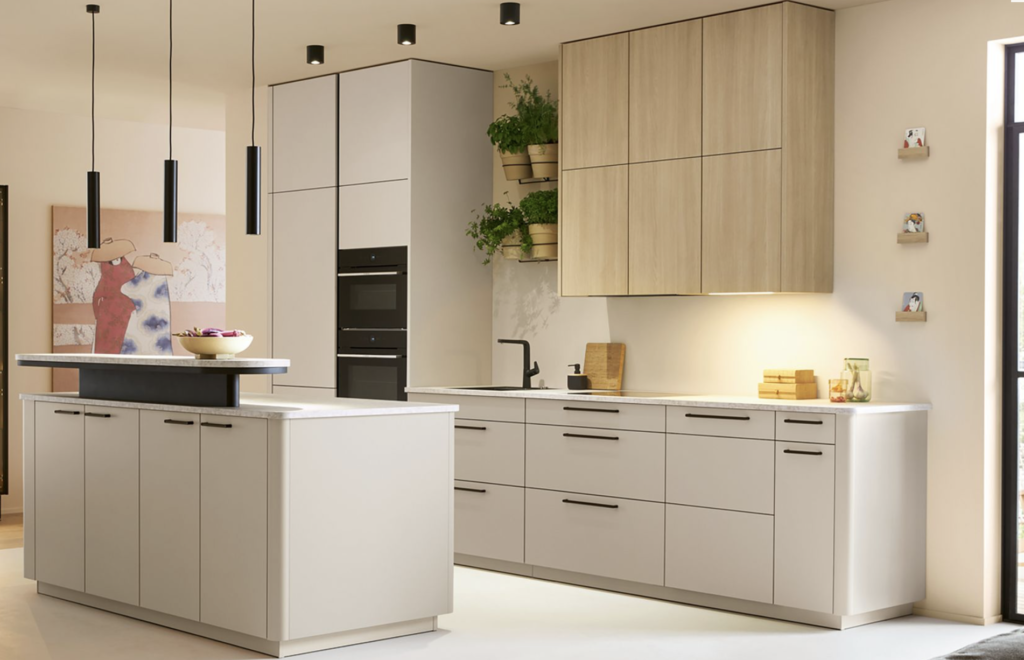
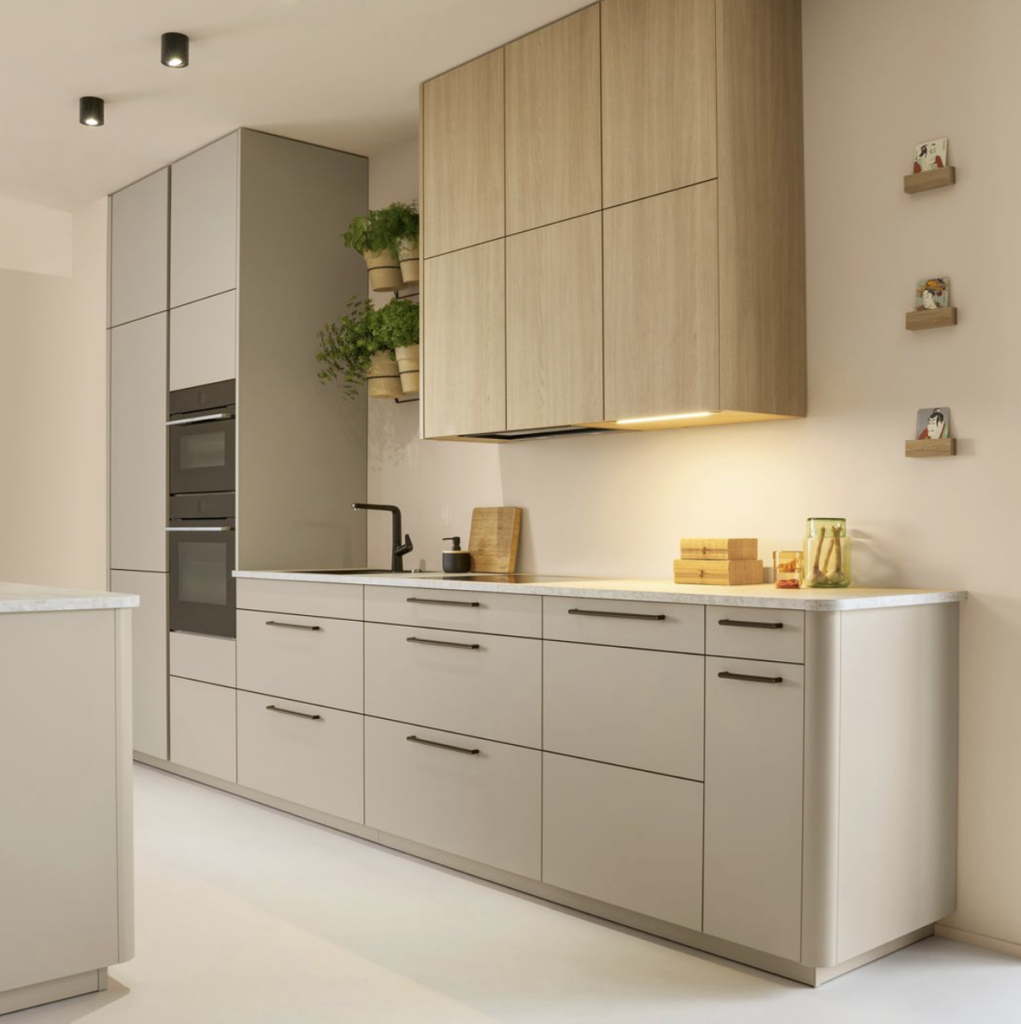
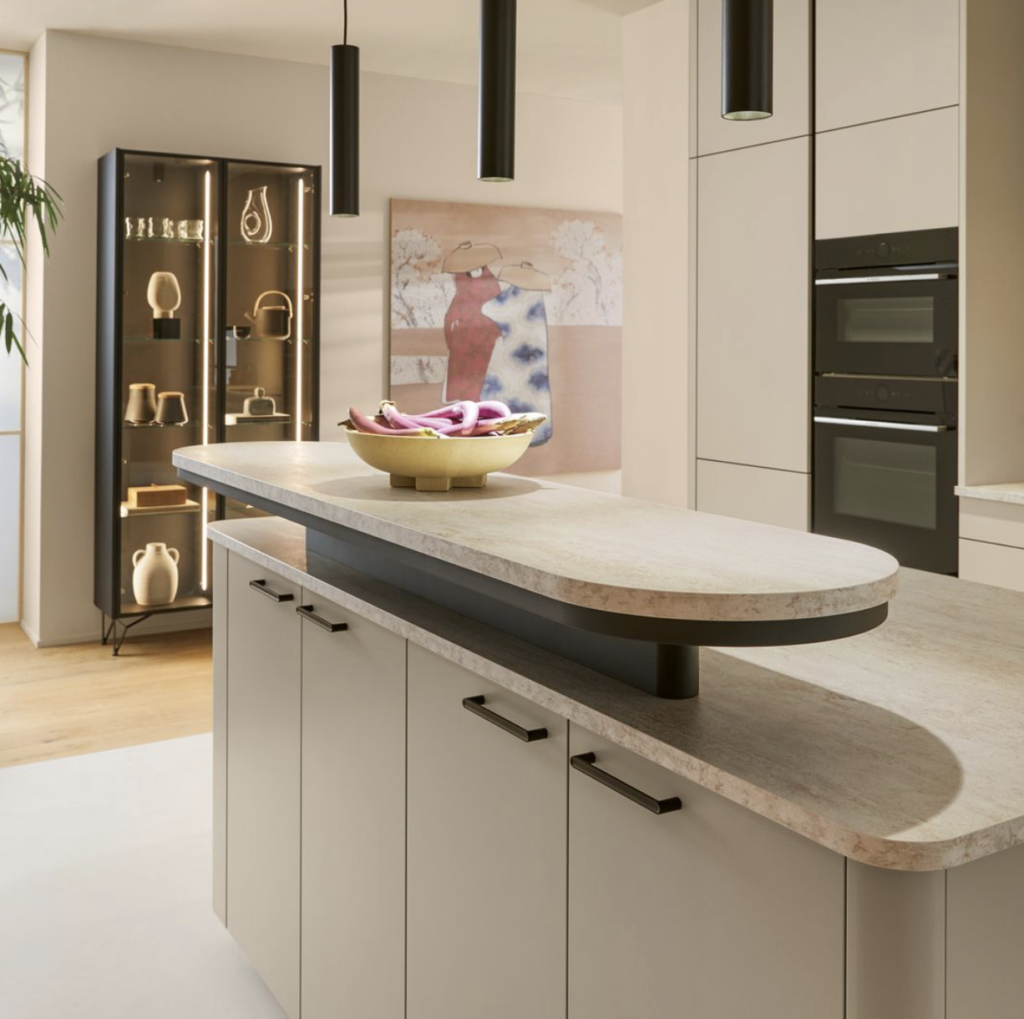
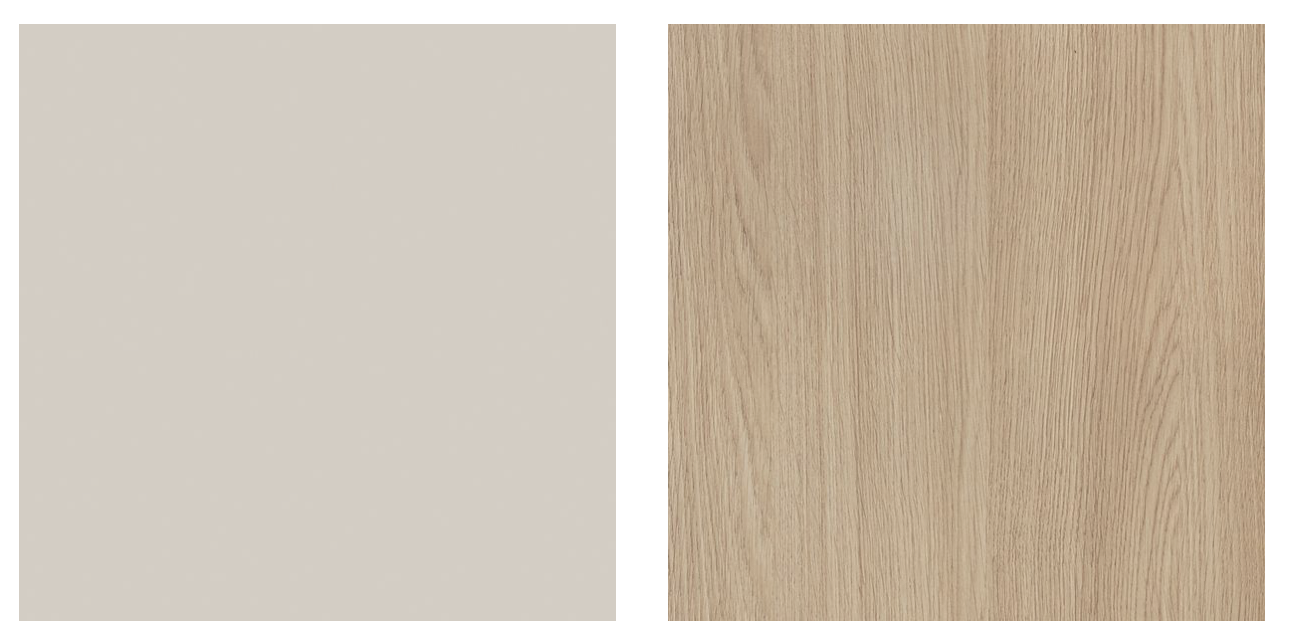
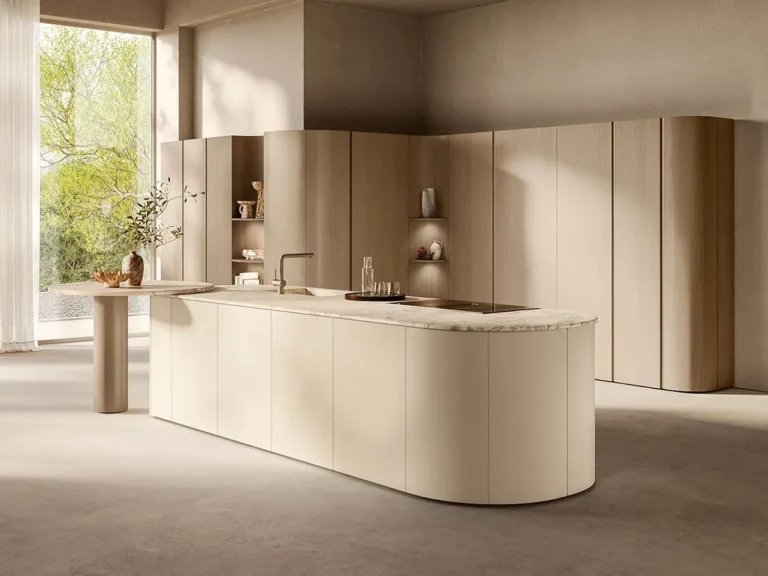
The cabinetry is simple but special, allowing the herbal properties of the materials to take center stage. Light beige colors and rounded support panel elements are pleasing to the eye and create a sense of light and calm. In some samples, black handles appear again to replace the strict minimalism. Complementing the kitchen island shelf – barboard – brings some organization as a replace the one-level island, making the place that’s both sociable and functional. Such furniture seems to invite it’s owners and their friends to gather and cook, and the lack of corners makes it a very kid-friendly design. The upper facades made of sandy oak complement the beige facades and give a feeling of nature to the space.
In such kitchen there is a sense of calm and coziness, it feels timeless, designed to create a deeply peaceful, settled atmosphere, while the overall composition eschews excess, focusing on parts, touches, calm perception of space.
Rounded corners
Soft, undulating forms gently disrupt the dominance of rigid, angular geometries. The rounded flowing silhouettes stand out against the traditionally sharp edges, altering the manner of movement in the space. It is as if the fixtures adapt to the human frame, inviting a more natural and easier interaction. The kitchen feels much less harsh and redundant architectural, colored through sculpted pieces that soften the overall composition and maintain its essential function.
Materials Contrast
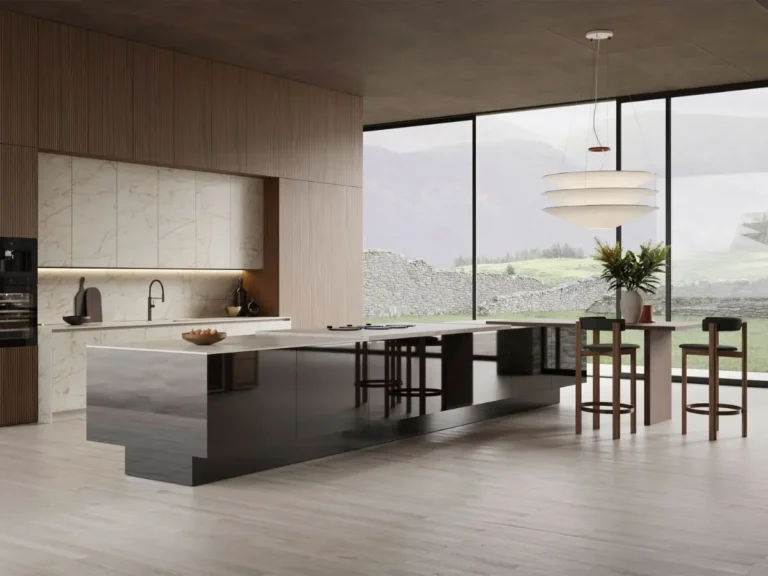
As its core, the kitchen functions as a noticeably efficient system, expressing an externally sophisticated physical dialogue. Warm wood fronts are set against polished stone countertops, developing a tactile contrast that feels grounded and complex. Linear lighting is carefully integrated into the layout, tracing the geometry of the kitchen and reinforcing its minimalist language, giving it depth and definition.
Wood and Steel Table&Snack Island
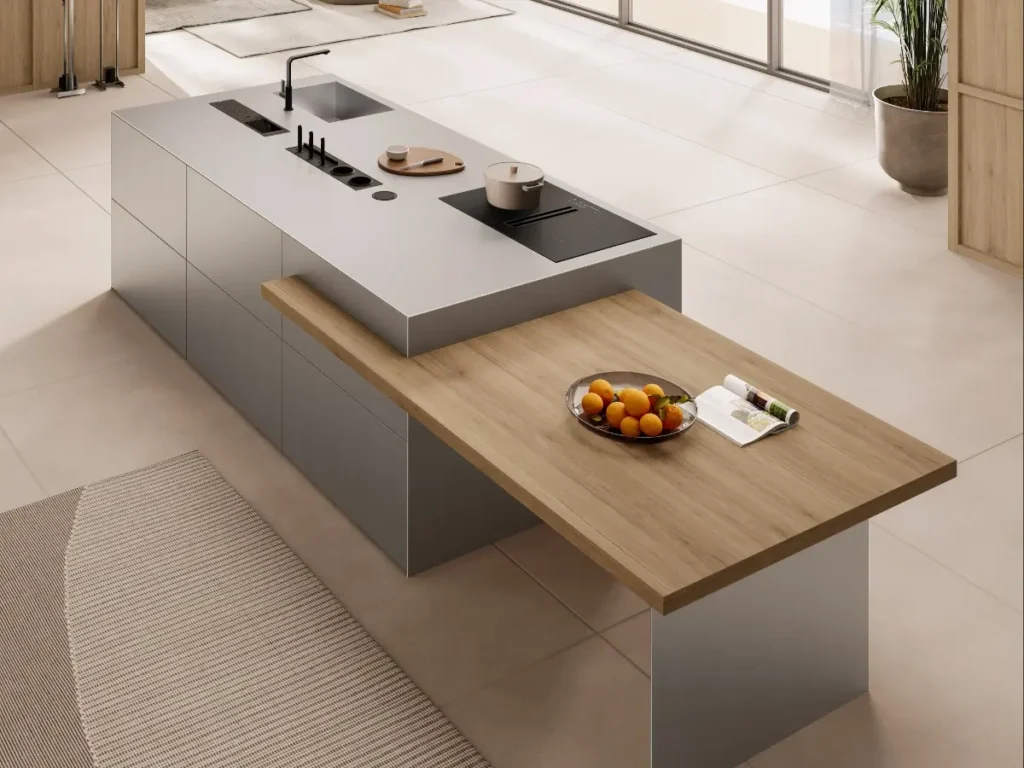
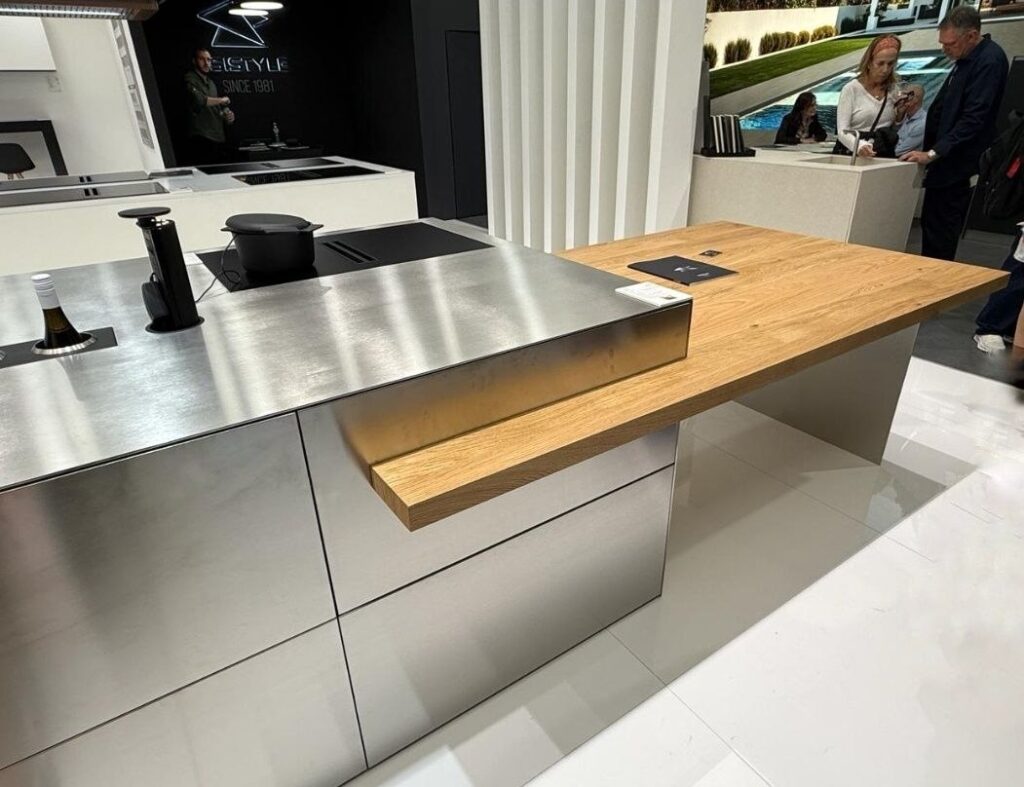
Within this composition of clean, deliberate lines, a distinctive architectural gesture emerges. A table appears to extend from a strict stainless steel island, yet rather than being a simple continuation, it reads as an independent structure — almost like an inserted architectural element. This concept, known as the Table and Snack System, introduces an oak wood volume that projects beneath the steel island, transforming the kitchen into a hybrid space, designed equally for function and for gathering.
An Island as a Floating Geometric Object
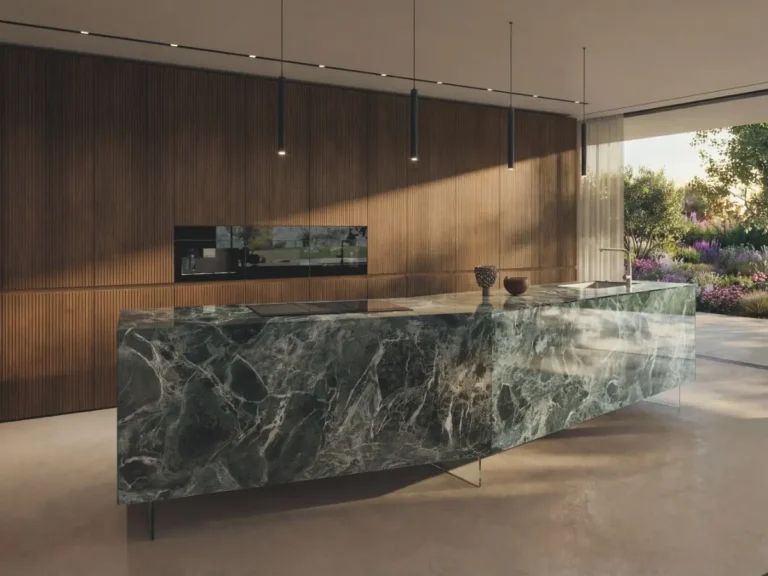
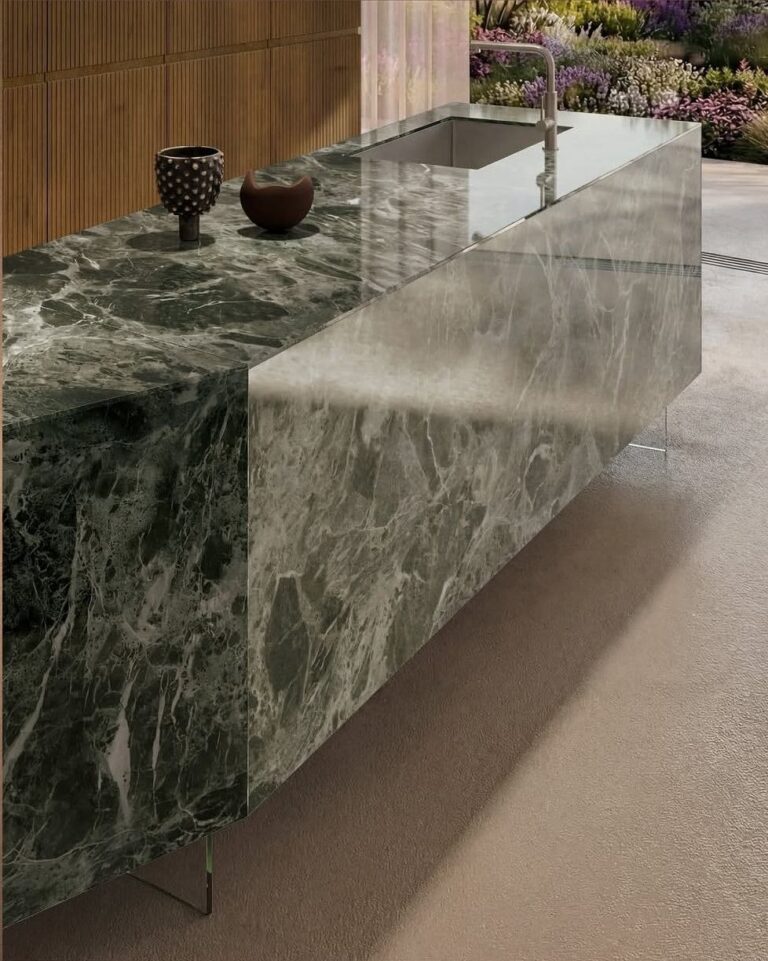
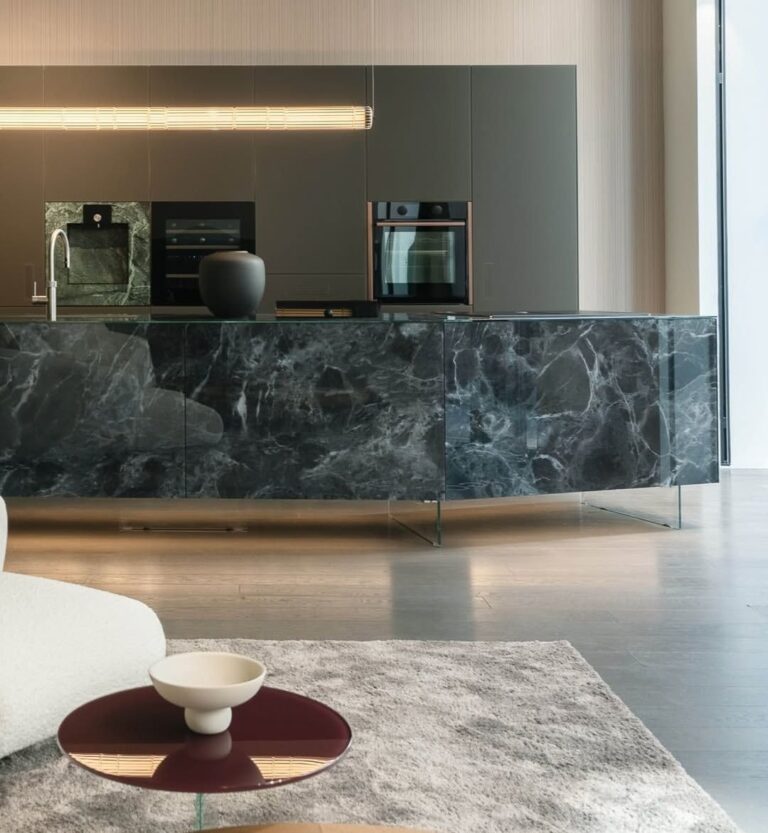
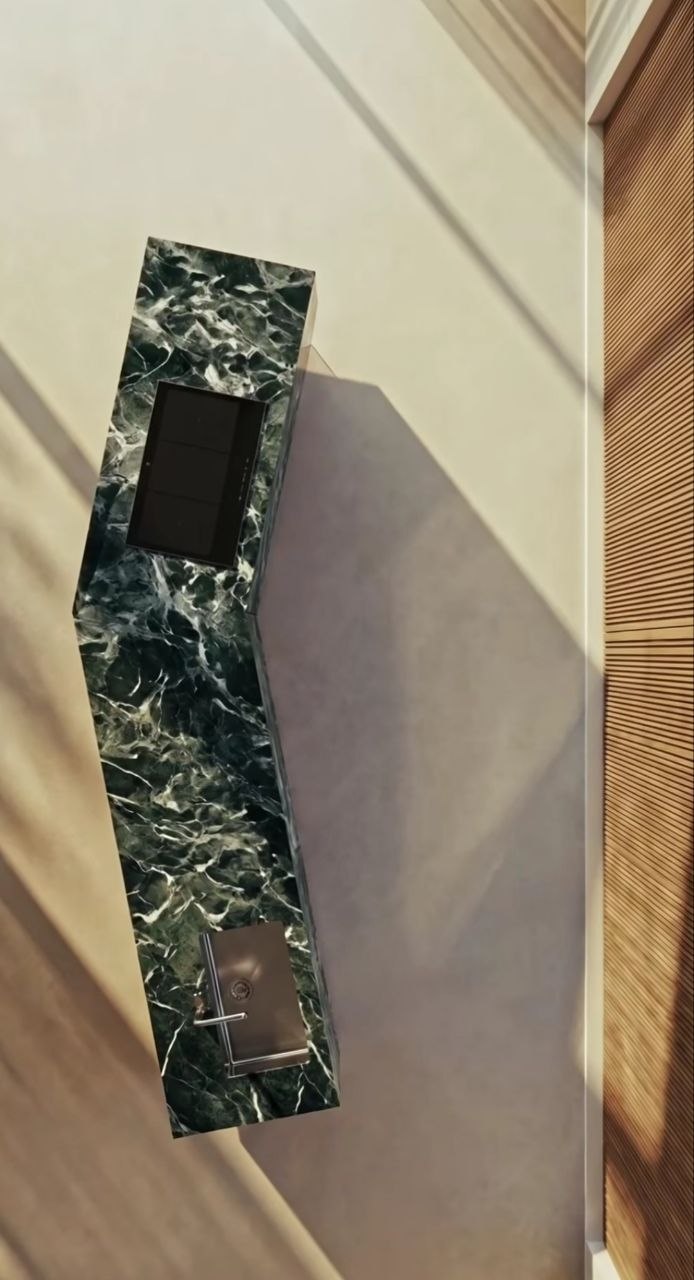
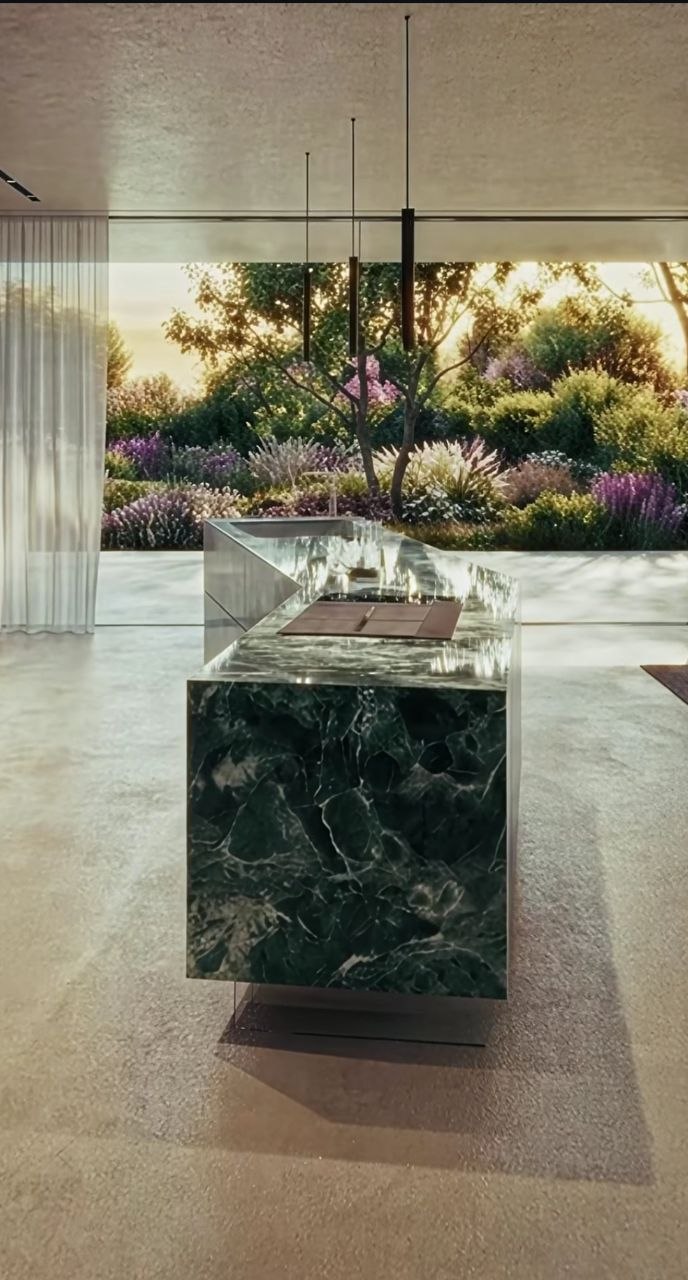
In 2026 brands represent kitchen in a more expressive, almost sculptural approach. Set against a backdrop of vertically-textured, ribbed facades, the overhanging deep emerald-colored stone island emerges as a central point of interest. Its suspended construction creates the illusion of a floating sculpture and introduces lightness and visual intrigue. The geometry of the island is intentionally designed to inspire untethered movement and interaction. Rather than implementing a rigid structure, the layout invites association — transforming the kitchen into an open, dynamic picture in which architecture and everyday lifestyle intersect seamlessly.